
In the theatre of modern defence and law enforcement, information is the most valuable asset. The integration of Security IoT—and more specifically, IoT for weapons management—has transitioned from a futuristic concept to an operational necessity. However, in high-security environments, the stakes of a deployment go far beyond mere connectivity. When tracking mission-critical assets, sensitive data, or weaponry, a failed implementation isn’t just a technical glitch, it is a breach of public trust and a risk to national security.
Strategic secure IoT deployment requires more than just choosing the right sensors; it demands a holistic architecture where technology, policy, and personnel training converge. At NexGen IoT Global, we see that the most resilient systems embed security and accountability into the project’s DNA from day one.
The Unique Challenges of High-Security IoT Deployments
Deploying IoT in high-security environments presents obstacles that standard commercial or industrial IoT projects never encounter. In sectors like defence and homeland security, “good enough” security is a non-starter.
1. Absolute Data Sensitivity
In a law enforcement IoT system, the data generated—location history, access logs, and biometric signatures—is highly classified. This is especially true for IoT for weapons management, where any breach can have severe consequences. Data must be protected not only from external cyber-attacks but also from unauthorized internal access. The architecture must ensure that data remains encrypted at rest, in transit, and during processing.
2. Uncompromising Chain of Custody
For a weapon tracking system or evidence management tool, the chain of custody tracking must be immutable. This becomes even more critical in IoT for weapons management, where every movement and handoff must be legally defensible and tamper-proof. There is no room for “ghost assets” or unlogged movements in a high-security armory.
3. The Insider Threat Matrix
While external hackers are a constant concern, high-security environments must also account for the insider threat. Whether through negligence or malicious intent, unauthorised personnel interacting with IoT nodes can compromise the entire network. A robust deployment must include granular access controls and behavioural monitoring.
4. Stringent Compliance and Audit Requirements
Government IoT compliance is a rigorous landscape. Systems must often meet specific certifications (such as FIPS 140-2 or CJIS standards) to ensure they integrate seamlessly into existing secure networks without creating new vulnerabilities.
Top Best Practices for Secure IoT Deployment
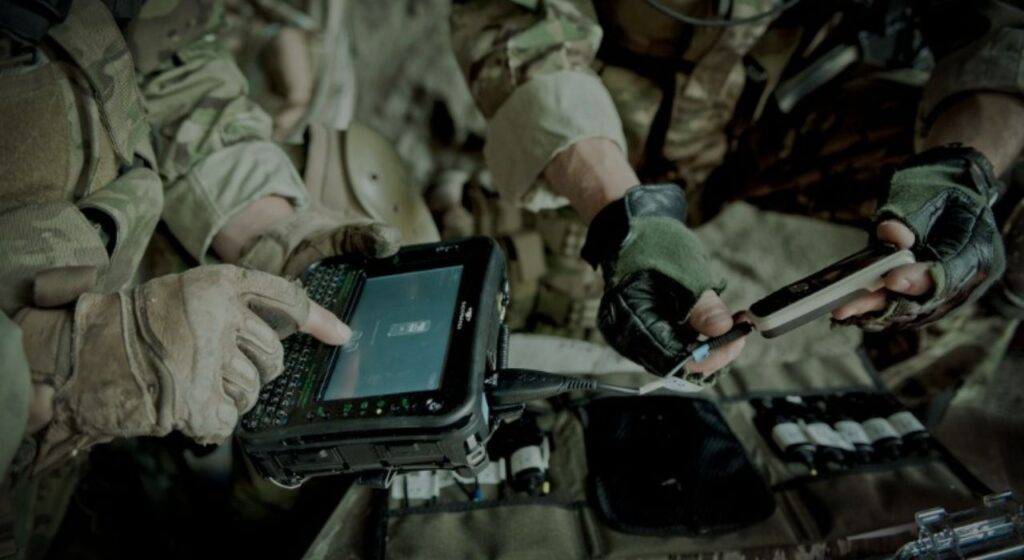
To mitigate these risks, NexGen IoT Global follows a rigorous framework for deployment. For CIOs and Operations Heads, these five pillars should guide every IoT initiative.
1. Define Clear Access and Custody Policies
Technology cannot fix a broken process. Before the first sensor is installed, organisations must define who has the right to move an asset, who can view its data, and what happens when an asset deviates from its prescribed path.
In a defence IoT solution, including IoT for weapons management, policy should dictate “Need to Know” and “Need to Access” protocols. This ensures that even if a device is physically accessed, the system prevents unauthorised data extraction or system manipulation.
2. Engage All Stakeholders Early
A common pitfall is treating an IoT deployment as a siloed IT project. Successful secure asset tracking requires a seat at the table for:
- IT/CISO Teams: To manage network security and integration.
- Physical Security Officers: To oversee the physical placement of gateways and tags.
- End-Users (Officers/Soldiers): To ensure the hardware doesn’t impede tactical movement or daily operations.
- Legal/Compliance: To ensure data handling meets all jurisdictional requirements.
3. Prioritise Encryption and Secure Authentication
Every node in a high-security IoT network is a potential entry point for an adversary. Systems supporting IoT for weapons management must implement end-to-end encryption and multi-factor authentication to prevent unauthorized access. This means that data is encrypted at the sensor level and only decrypted within a secure, authorized application. Furthermore, multi-factor authentication (MFA) or biometric verification should be mandatory for any personnel interacting with the management software.
4. Build for Scalability and Future Expansion
High-security environments are dynamic. A system that works for 500 assets must be architecturally capable of handling 5,000 without a total overhaul. Next-generation IoT security, especially in IoT for weapons management, relies on modularity. By using open but secure standards, agencies can ensure they aren’t locked into a single vendor and can integrate new sensor types (like environmental or biometric sensors) as they become available.
5. Train for Usability and Trust
If an IoT system is cumbersome, personnel will find workarounds. These “shadow” processes are the greatest threat to security. Training should focus not just on how to use the tags and readers, but why they are essential for safety and accountability. When the front-line staff trusts the data, the integrity of the entire system increases.
Why Policy, Training, and Technology Must Work Together
The most sophisticated secure asset tracking hardware in the world will fail if the person holding it hasn’t been trained, or if the organisation’s policy allows for “shortcuts.”
At the intersection of these three elements is where mission-critical reliability lives.
- Technology provides the raw data and the “how.”
- Policy provides the “when” and “who.”
- Training ensures the “why” is understood, reducing the human factor risks that lead to data leaks or lost assets.
Change management is particularly difficult in legacy-heavy environments like law enforcement and defence. Moving from manual logbooks to a smart weapon management system is a cultural shift as much as a digital one. Leaders must champion this shift by demonstrating how IoT reduces the administrative burden and increases officer safety.
How NexGen IoT Global Approaches Secure Deployments
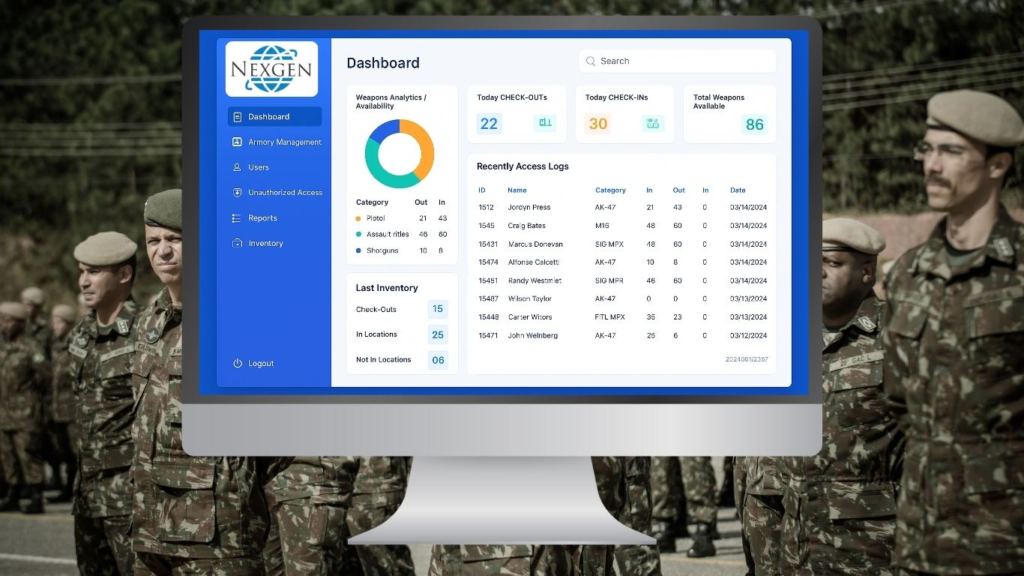
At NexGen IoT Global, we deliver more than hardware—we provide a mission-critical philosophy tailored for IoT for weapons management. We build our approach to IoT security best practices on four core principles:
Secure-by-Design Architecture
We assume the environment is hostile. Our sensors and gateways are hardened against both cyber and physical tampering. We utilise “zero-trust” architecture, meaning every device and user must be continuously verified.
Compliance-Ready Systems
We design our solutions from the ground up to meet and exceed government IoT compliance standards. Whether it’s CJIS, HIPAA, or specialised defence requirements, we ensure your deployment is audit-ready from day one.
Mission-Critical Reliability
In a high-security environment, downtime isn’t an option. Our systems feature redundant connectivity (merging 5G, LPWAN, and local edge processing) to ensure that even if the primary network goes down, your chain of custody tracking remains intact.
Future-Proof Engineering
We build systems that evolve. As AI and predictive analytics become more prevalent, our hardware is ready to handle increased computational loads at the edge, allowing for predictive security analytics without needing to replace the underlying infrastructure.
Conclusion: Security Starts with Smart Planning
The deployment of IoT in high-stakes environments is a transformative opportunity for law enforcement and defence agencies. It offers a level of visibility and accountability that was previously impossible. However, this power comes with the responsibility of meticulous planning and a security-first mindset.
By focusing on the convergence of technology, policy, and people, organisations can build systems that don’t just track assets—they protect missions and save lives. Success in the field begins long before teams activate the sensors; it starts with a commitment to excellence in the deployment process.
NexGen IoT Global remains at the forefront of this evolution, serving as a trusted partner for those who cannot afford to fail.
Security starts with smart planning — and NexGen IoT Global ensures every implementation is secure, compliant, and future-proof.

Ted Kostis
By Ted Kostis, Co-Founder of NexGen IoT Global and former owner of Silent Partner Technologies